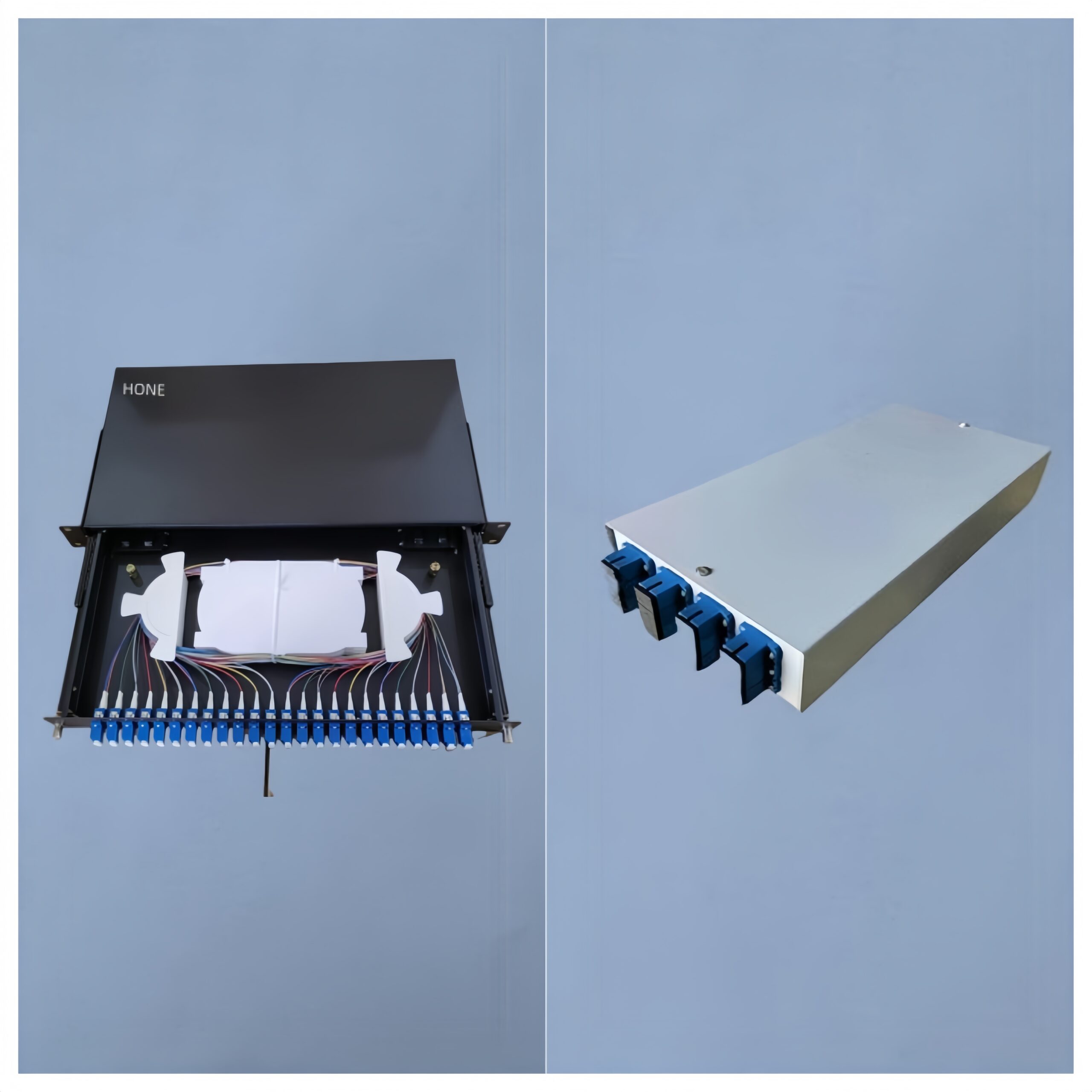
When designing a fiber optic network, choosing the right patch panel is essential for efficient cable management and long-term performance. Among the many types of fiber patch panels, rack mount and wall mount are the most commonly used options. Each design has distinct features that make it better suited for different installation environments. This article will compare rack mount and wall mount fiber patch panels, helping you determine which type is best suited for your needs.
If you’re new to fiber patch panels, we recommend reading our comprehensive guide on What a Fiber Optic Patch Panel Is and How It Works before diving into the specifics of rack and wall mount options.
Rack Mount Fiber Patch Panels: Ideal for High-Density Installations
What is a Rack Mount Fiber Patch Panel?
Rack mount fiber patch panels are designed to fit into standard 19-inch server racks. They typically come in 1U, 2U, or higher configurations, depending on the number of fiber ports they support. These patch panels are most commonly used in data centers, telecom rooms, and large-scale network environments.
Advantages of Rack Mount Patch Panels
- Space Efficiency: Rack mount panels allow for high-density fiber configurations in small spaces, making them ideal for environments where space is limited.
- Scalability: As your network grows, rack mount patch panels can easily be expanded by adding additional panels in the same rack.
- Organization: These panels are designed to keep cables neatly organized, with ports that are easy to label and access.
Best Use Cases for Rack Mount Fiber Patch Panels
- Data centers: Due to the need for high fiber density and organization.
- Telecommunication facilities: Where efficient use of rack space is crucial.
- Large enterprise networks: Where future expansion and scalability are important.
Wall Mount Fiber Patch Panels: Ideal for Compact or Remote Installations
What is a Wall Mount Fiber Patch Panel?
Wall mount fiber patch panels are designed to be mounted directly onto a wall, making them ideal for environments where there is limited floor space or no access to a standard server rack. These panels are usually smaller and more compact than rack mount versions.
Advantages of Wall Mount Patch Panels
- Space-Saving: Perfect for smaller environments where floor space or rack space is limited.
- Easy Installation: Wall mount panels are typically simpler to install compared to rack mount panels and can be placed in more accessible locations.
- Cost-Effective: Wall mount panels tend to be less expensive than rack mount panels, making them an economical choice for smaller setups.
Best Use Cases for Wall Mount Fiber Patch Panels
- FTTH (Fiber to the Home) deployments: Common in home offices and small distribution points where rack space is not available.
- Small businesses or remote installations: Where a limited number of fiber connections are needed.
- Industrial environments: In factories or warehouses where space constraints exist.
Rack Mount vs Wall Mount: Key Differences
1. Size and Capacity
- Rack Mount: Typically offers higher fiber density and can support larger configurations of fiber ports, ideal for large networks.
- Wall Mount: Compact, typically designed for fewer ports, making them ideal for small installations.
2. Installation Location
- Rack Mount: Installed in a standard 19-inch rack, usually in a server room or data center.
- Wall Mount: Installed directly onto the wall, ideal for smaller spaces or non-rack environments.
3. Scalability
- Rack Mount: Easily scalable by adding more panels to the rack as your network grows.
- Wall Mount: Less scalable, typically designed for small, fixed installations.
4. Cost
- Rack Mount: Usually more expensive, especially for high-density configurations.
- Wall Mount: More affordable and often the better choice for smaller, less complex networks.
5. Usage
- Rack Mount: Best suited for environments that require organization, scalability, and future expansion.
- Wall Mount: Best for environments with limited space or those that need cost-effective solutions.
4. How to Choose Between Rack Mount and Wall Mount Patch Panels
When choosing between a rack mount and a wall mount fiber patch panel, consider the following factors:
1. Available Space
- If you have access to a standard server rack and need to manage a large number of fiber connections, a rack mount patch panel is the best option.
- If you are working with limited space, or need a simpler setup, a wall mount patch panel will meet your needs.
2. Network Size and Scalability
- For large-scale networks or projects that anticipate future growth, rack mount panels provide more room for expansion.
- If you are managing a smaller network or working on a one-time project, wall mount panels are a more cost-effective solution.
3. Budget Considerations
- Rack mount panels may have higher upfront costs, but they are worth the investment for large or scalable networks.
- Wall mount panels offer a more budget-friendly solution for smaller installations.
Conclusion: Which Fiber Patch Panel is Right for You?
Choosing the right fiber optic patch panel—whether rack mount or wall mount—depends largely on the installation environment, network size, and budget. While rack mount panels offer higher capacity, organization, and scalability, wall mount panels are the best option for smaller, cost-conscious installations.
By understanding the advantages of each type of patch panel and aligning your choice with the specific needs of your network, you can ensure that your fiber management system is efficient, scalable, and cost-effective.
If you’re still unsure which type of fiber optic patch panel is right for your project, check out our detailed guide on fiber patch panel applications and make an informed decision based on your specific requirements.






 English
  Español