
Introduction
When planning a fiber optic network, one of the most common questions is whether to choose air blown fiber or traditional pulled fiber cable. While both technologies deliver high-speed optical transmission, their installation methods, cost structure, and scalability differ significantly.
This article compares air blown fiber and pulled fiber cable to help network designers and operators select the most suitable solution.
Installation Method Comparison
Air Blown Fiber Installation
Air blown fiber cables are installed by blowing lightweight fiber units through pre-installed microducts using compressed air. Fibers can be added, removed, or replaced without disturbing existing infrastructure.
This method is especially common in modern FTTH and access networks.
Traditional Pulled Fiber Installation
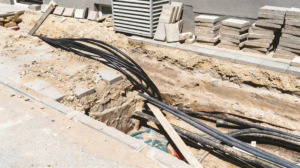
Traditional fiber cables are installed by pulling or winching the cable through ducts or conduits. Once installed, upgrading or expanding capacity usually requires additional construction work.
This approach has been widely used in long-established backbone and metro networks.
Key Differences at a Glance
| Feature | Air Blown Fiber | Traditional Pulled Fiber |
|---|---|---|
| Installation | Blown with air | Pulled mechanically |
| Initial investment | Lower | Higher |
| Scalability | Excellent | Limited |
| Upgrade flexibility | High (add fibers later) | Low |
| Installation speed | Fast | Slower |
| Network disruption | Minimal | Often required |
Cost Structure and Investment Strategy
Air Blown Fiber: Pay-As-You-Grow
Air blown systems allow operators to:
- Install ducts once
- Deploy fibers only when needed
- Reduce upfront CAPEX
This makes air blown fiber ideal for gradual FTTH rollouts and expanding urban networks.
Traditional Pulled Fiber: One-Time Deployment
Pulled fiber networks typically require:
- Full fiber capacity installed at once
- Higher initial material and labor costs
- Limited flexibility for future expansion
They are better suited for static networks with stable, long-term capacity requirements.
Scalability and Future Expansion
Scalability is where air blown fiber clearly stands out.
By design, air blown networks allow new fiber cables to be installed through spare microducts at any time. To fully benefit from the scalability of air blown systems, it is essential to choose the right air blown fiber cable based on blowing distance, fiber count, and duct size.
Traditional pulled fiber networks, by contrast, often require:
- New ducts
- Additional civil work
- Service interruptions
Typical Application Scenarios
Where Air Blown Fiber Is Preferred
- FTTH / FTTB deployments
- Campus and enterprise networks
- Metro access networks
- Environments requiring frequent upgrades
For FTTH projects,air blown fiber cable for FTTH networks is widely adopted due to its scalability and flexibility in access-layer deployment and offers clear long-term advantages.
Where Traditional Pulled Fiber Is Still Used
- Long-haul backbone routes
- Environments without microduct infrastructure
- Projects with fixed capacity planning
In some cases, hybrid networks combining both technologies are deployed.
Product-Level Perspective
Different air blown cable types support different network layers:
- Access / drop:EPFU Air Blown Fiber Cable
- Distribution:Super Mini Uni-tube Air Blown Fiber Cable
- Feeder / backbone:24–288 Cores Air Blown Fiber Cable
Each cable type is optimized for specific blowing distances and fiber capacities.
Which One Should You Choose?
| Project Requirement | Recommended Solution |
|---|---|
| Flexible expansion | Air blown fiber |
| Lower upfront cost | Air blown fiber |
| Fixed long-term capacity | Pulled fiber |
| Minimal disruption | Air blown fiber |
In most modern access and FTTH deployments, air blown fiber has become the preferred choice due to its adaptability and cost efficiency.
Conclusion
Air blown fiber and traditional pulled fiber cables each have their place in fiber optic networks. However, as demand for scalability and fast deployment continues to grow, air blown fiber offers clear advantages in flexibility, cost control, and future-proofing.
For operators planning next-generation networks, air blown fiber is no longer an alternative — it is a strategic upgrade.



 English
  Español