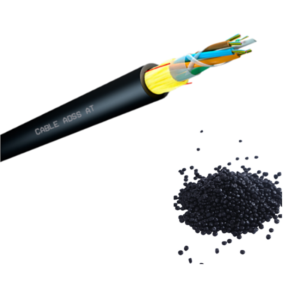
Why AT Jacket vs PE Jacket ADSS Cable Price Matters
When selecting ADSS (All-Dielectric Self-Supporting) fiber optic cables for aerial installations, one of the most common questions engineers and procurement teams ask is:
Should we choose AT jacket or PE jacket—and how much does it affect the price?
The answer has a direct impact on project safety, long-term reliability, and total cost. AT jacket ADSS cables are designed for high-voltage environments, while PE jacket ADSS cables are optimized for standard aerial deployments. Understanding the price difference and application boundaries between these two jacket types helps avoid both over-specification and under-design.
This article provides a clear AT jacket vs PE jacket ADSS cable price comparison, explains why AT jackets cost more, and helps you select the right solution for your project.
What Is PE Jacket ADSS Cable?
PE (Polyethylene) jacket ADSS cable is the most commonly used and cost-effective option for aerial fiber installations.
Key Characteristics of PE Jacket ADSS Cable
- Standard UV-resistant polyethylene outer sheath
- Lightweight structure with good mechanical flexibility
- Suitable for low to medium electrical field environments
- Lower material and manufacturing cost
Typical Applications
- Telecom aerial backbone networks
- FTTH distribution routes
- Rural and suburban pole lines
- Power distribution lines below critical voltage thresholds
PE jacket ADSS cable is widely adopted because it offers a balanced combination of performance and affordability when electrical tracking risk is low.
What Is AT Jacket ADSS Cable?
AT (Anti-Tracking) jacket ADSS cable is specifically engineered for installation along high-voltage power transmission lines, where strong electric fields can cause surface tracking and sheath degradation.
Key Characteristics of AT Jacket ADSS Cable
- Special anti-tracking polymer compound
- Superior resistance to electrical erosion and dry-band arcing
- Thicker and heavier outer jacket
- Designed for long-term operation in high-voltage corridors
Typical Applications
- 66kV, 110kV, 132kV, and 220kV transmission lines
- High pollution or coastal environments
- Long-span aerial installations on power towers
AT jacket ADSS cables undergo stricter material formulation control and testing, which directly contributes to their higher price.
AT Jacket vs PE Jacket ADSS Cable Price Comparison (2025)
From a pricing perspective, AT jacket ADSS cable is consistently more expensive than PE jacket ADSS cable, even with the same fiber count and span rating.
Typical Price Range per Kilometer
| Jacket Type | Fiber Count | Span Length | Estimated Price (USD/km) |
| PE Jacket | 12 cores | 100–200 m | $120 – $180 |
| PE Jacket | 24–48 cores | 200–300 m | $160 – $260 |
| AT Jacket | 12–24 cores | 200–400 m | $180 – $280 |
| AT Jacket | 48–72 cores | 300–500 m | $250 – $350 |
| AT Jacket | 96+ cores | 500 m+ | $350 – $500+ |
Prices vary based on fiber type, aramid yarn strength, certification requirements, and order volume.
Why AT Jacket ADSS Cable Costs More
Several technical and manufacturing factors contribute to the higher price of AT jacket ADSS cable:
1. Specialized Jacket Compound
AT jackets use proprietary anti-tracking materials that resist electrical erosion, which are significantly more expensive than standard PE compounds.
2. Increased Jacket Thickness
To withstand long-term exposure to high electric fields, AT jackets are typically thicker, increasing raw material consumption.
3. Enhanced Testing Requirements
AT jacket cables often require:
- Tracking resistance tests
- Electrical field aging tests
- Extended mechanical and environmental testing
These additional tests increase production time and quality control costs.
Installation Environment and Cost Impact
Choosing between AT and PE jackets should always be based on installation conditions, not just cable price.
Key Environmental Factors
- Voltage level of nearby power lines
- Electrical field strength at the installation position
- Pollution level (industrial dust, salt fog)
- Span length and mechanical tension
In high-voltage or heavily polluted environments, using PE jacket ADSS cable can result in premature sheath failure, leading to costly maintenance or cable replacement.
When PE Jacket ADSS Cable Is the Better Choice
PE jacket ADSS cable is usually sufficient and more economical when:
- Installed on telecom poles or low-voltage power lines
- Voltage levels are below 35kV–66kV
- Electrical field exposure is minimal
- Budget optimization is a priority
- Short to medium spans are required
In these scenarios, selecting AT jacket cable would increase cost without delivering meaningful performance benefits.
When AT Jacket ADSS Cable Is Worth the Higher Price
AT jacket ADSS cable is strongly recommended when:
- Installed along 66kV–220kV transmission lines
- Positioned close to phase conductors
- Located in high-pollution or coastal regions
- Long spans (300–800 m) are required
- Long-term reliability and safety are critical
In such cases, the higher upfront cost of AT jacket ADSS cable is justified by reduced failure risk and lower lifecycle cost.
AT Jacket vs PE Jacket: Price Is Not the Only Decision Factor
While price is an important consideration, final jacket selection should also account for:
- Local utility standards
- Installation position on towers
- Expected service life
- Maintenance accessibility
An incorrectly selected jacket type can result in higher total cost over the project lifecycle, even if the initial cable price is lower.
Conclusion: AT Jacket vs PE Jacket ADSS Cable Price
In summary:
- PE jacket ADSS cable offers lower upfront cost and is suitable for standard aerial environments
- AT jacket ADSS cable costs more but is essential for high-voltage and high-risk installations
The most cost-effective solution is not the cheapest cable, but the one that matches your real operating conditions.
If you want to learn more details,please refer to the article: ADSS Fiber Cable Price



 English
  Español