Introduction
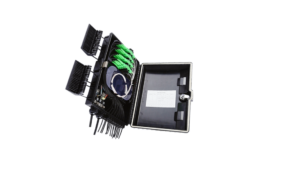
In FTTH access networks, multiple types of fiber enclosures are deployed at different stages of the optical path. Among them, fiber distribution boxes and fiber optic termination boxes are often mentioned together, sometimes even used interchangeably in project discussions.
However, despite their similar appearance, these two enclosures serve very different roles in network topology, capacity planning, and field operations. Understanding how they differ helps engineers avoid overdesign, reduce installation complexity, and simplify long-term maintenance.
Functional Role in the Network
A fiber distribution box is typically positioned closer to the distribution or aggregation point of the network. It focuses on organizing incoming feeder fibers and distributing them to multiple outgoing fibers, often acting as an intermediate node.
By contrast, a termination box is installed nearer to the subscriber side, where fiber connections are finalized and prepared for drop cables. In practical deployment, engineers often evaluate how termination points differ from fiber distribution nodes when deciding which enclosure to use at the access layer.
Internal Structure and Capacity Differences
From a structural perspective, distribution boxes usually provide more space for fiber management, routing trays, and higher fiber counts. They are designed to handle multiple input and output fibers with flexible routing paths.
Termination boxes, on the other hand, emphasize compact layouts and controlled bending radius for final splicing or connector termination. In many FTTH projects, planners distinguish enclosures based on fiber routing complexity at the distribution stage, which directly impacts enclosure size and internal design.
Installation Environment and Protection Level
Another key difference lies in installation environments. Distribution boxes are commonly installed in building basements, telecom rooms, or outdoor cabinets, where higher capacity and accessibility are required.
Termination boxes are more frequently mounted inside apartments, corridors, or on building facades. When selecting enclosures, installers often consider deployment environments for access-layer fiber enclosures, especially regarding dust protection, moisture resistance, and available installation space.
Typical FTTH Application Scenarios
In a standard FTTH architecture, distribution boxes are used to split and route fibers serving multiple subscribers, while termination boxes complete the final connection to individual homes or offices.
This separation becomes particularly clear in multi-dwelling deployments, where designers define enclosure roles based on subscriber-side termination requirements in FTTH projects, ensuring clear responsibility for each network segment.
Maintenance and Operational Consideration
Maintenance workflows also differ between these two enclosure types. Distribution boxes require easier access for future expansion or fiber rearrangement, while termination boxes focus on stability and minimal intervention once installed.
Field experience shows that many access network issues stem from misunderstanding enclosure roles rather than product quality. Clear differentiation during design helps reduce operational issues caused by incorrect enclosure selection later in the network lifecycle.
Conclusion
Although fiber distribution boxes and fiber optic termination boxes may look similar, their functions, structure, and placement within FTTH networks are fundamentally different. Correct selection ensures efficient fiber management, smoother installation, and fewer problems during network operation.
Understanding these differences at the design stage helps engineers build scalable and maintainable access networks without unnecessary complexity.



 English
  Español