When estimating fiber optic cable budgets, many buyers focus on fiber count or armor type. However, jacket material often plays a decisive role in overall cost—especially in projects involving indoor or fire-regulated environments.
This article examines how PE and LSZH jackets influence pricing within the broader framework of
long-term cost drivers of armored fiber optic cables
Understanding PE and LSZH Jacket Materials
PE (Polyethylene) jackets are widely used for outdoor fiber optic cables due to their durability, UV resistance, and cost efficiency. They are relatively simple to manufacture and do not require additional fire-performance testing.
LSZH (Low Smoke Zero Halogen) jackets are engineered for environments where fire safety is critical. When burned, they emit minimal smoke and no corrosive halogen gases, making them suitable for indoor, underground, and public infrastructure installations.
This difference in material purpose is the first reason LSZH cables typically carry a higher price tag.
Why Fire-Safety Compliance Raises Cable Prices
LSZH fiber optic cables must comply with strict fire-performance standards, particularly in markets governed by CPR regulations. Meeting these standards requires additional formulation control, flame-retardant additives, and certified testing procedures.
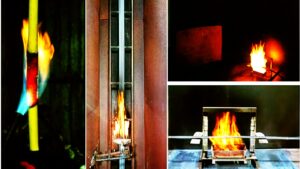
The real-world impact of these requirements can be seen in our ECA-level LSZH fiber cable combustion test video.
Each compliance step adds manufacturing cost before the cable ever reaches the installation site.
ECA vs DCA Ratings: Cost Differences Within LSZH Cables
Not all LSZH cables are equal in terms of fire performance.
- ECA-rated LSZH cables meet baseline flame-retardant requirements
- DCA-rated LSZH cables must limit flame spread, heat release, and smoke density
Achieving DCA performance involves stricter compound control and more demanding testing, which directly increases production cost.
A side-by-side demonstration is available in our DCA-class LSZH fiber optic fire behavior experiment
From a pricing perspective, DCA-rated LSZH cables can be significantly more expensive than ECA-rated versions with identical fiber counts.
Installation Environment as a Secondary Cost Factor
Fire-rated jacket requirements usually apply to indoor or semi-enclosed environments. These conditions influence pricing in ways that differ from outdoor-only installations.
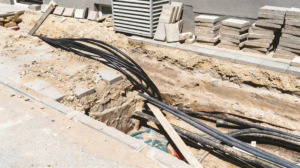
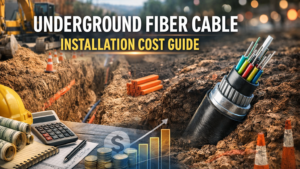
For example, cost structures in LSZH indoor projects contrast sharply with those found in cost considerations for underground direct burial fiber deployments.
In direct burial scenarios, PE jackets are often sufficient, avoiding the additional expense of LSZH materials altogether.
Combined Effect of Jacket and Armor Design
In some projects, LSZH jackets are specified alongside enhanced mechanical protection. When jacket and armor upgrades are combined, costs increase cumulatively rather than incrementally.
A similar pricing pattern appears when comparing price differences between single-layer and dual-layer armored fiber cables .
Understanding this stacking effect helps buyers avoid unnecessary over-specification.
Choosing the Right Jacket Without Overspending
From a cost-control standpoint, jacket selection should be driven by regulation—not preference.
- PE jackets are suitable when fire regulations do not apply
- LSZH jackets are essential when human safety and compliance are mandatory
Specifying LSZH in non-regulated environments may increase costs without delivering real project value.
Conclusion: Jacket Material Is a Hidden Pricing Lever
The price difference between PE and LSZH fiber optic cables reflects more than raw material cost. Fire-safety compliance, testing requirements, and manufacturing complexity all contribute to higher LSZH pricing.
By aligning jacket choice with actual installation and regulatory requirements, buyers can achieve compliance without unnecessary cost escalation.



 English
  Español