Introduction
When selecting armored fiber optic cables for outdoor or industrial deployments, SWA (Steel Wire Armored) and GYTS (Corrugated Steel Tape Armored) are two structures that are frequently compared.
Although both are designed to protect optical fibers from mechanical damage, they differ significantly in armor strength, installation method, and overall cost. Understanding these differences helps engineers avoid over-specification and unnecessary budget increases.
What Is GYTS Armored Fiber Optic Cable?
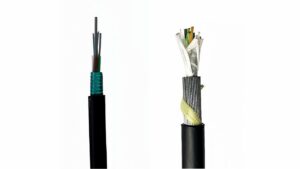
GYTS is a single loose-tube outdoor armored fiber optic cable protected by corrugated steel tape (CST). It is designed to balance mechanical protection and cost efficiency.
Typical GYTS features include:
- Corrugated steel tape armor for rodent resistance
- Central loose tube filled with jelly compound
- Water-blocking yarns or tapes
- UV-resistant PE or LSZH outer jacket
GYTS cables are widely used in telecom access networks, FTTx deployments, and outdoor duct installations where extreme tensile strength is not required.
For detailed structure options and available configurations, you can review the GYTS armored fiber optic cable specifications to confirm fiber counts, jacket materials, and standards.
What Is SWA Armored Fiber Optic Cable?
SWA (Steel Wire Armored) cable uses galvanized steel wires applied around the cable core, providing significantly higher tensile strength than tape-armored designs.
Because of its robust construction, SWA is commonly deployed in:
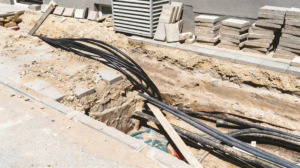
- Direct burial installations
- Industrial zones with vibration or heavy loads
- Power, railway, mining, and oil & gas environments
SWA cables are heavier and less flexible, but they excel in applications where mechanical stress and pulling force are critical concerns.
Structural Differences Between SWA and GYTS
| Feature | GYTS | SWA |
|---|---|---|
| Armor type | Corrugated steel tape | Steel wire armor |
| Tensile strength | Medium | Very high |
| Weight | Lighter | Heavier |
| Flexibility | Better | Lower |
| Typical installation | Duct / conduit | Direct burial / heavy-duty |
| Common fiber count | 2–144 cores | 4–24 cores |
Cost Comparison: Why SWA Is More Expensive Than GYTS
From a budget perspective, GYTS is usually the more economical option, while SWA carries a noticeable price premium.
Typical FOB China factory pricing (2025):
- GYTS 24-core: USD 150–200 / km
- SWA 12-core: USD 300–450 / km
The price gap mainly comes from:
- Higher steel content in SWA
- More complex manufacturing process
- Increased shipping cost due to heavier weight
If you want a broader view of how armor type, fiber count, and jacket materials influence pricing, this armored fiber optic cable pricing overview explains the overall cost structure in detail.
Application Comparison: When to Use GYTS or SWA
Choose GYTS When:
- Cable is installed in ducts or conduits
- Mechanical stress is moderate
- Cost control is a priority
- Project involves access or metro networks
In many outdoor projects, GYTS delivers sufficient protection at a much lower cost than heavier armored alternatives.
For installations without ducts, project owners often consider burial solutions, and this direct burial armored fiber cable cost guide explains when additional protection becomes necessary.
Choose SWA When:
- Cable is directly buried
- Long pulling distances are involved
- The environment includes vibration, impact, or heavy machinery
In these cases, the higher cost of SWA is justified by risk reduction and long-term reliability.
➡️ 【Cluster Link #2 – 在这里加链接】
自然锚文本句示例:
In projects that require even higher mechanical protection, many engineers also compare multi-layer designs, and this double armored fiber optic cable cost comparison provides further insight.
Can GYTS Replace SWA in Some Projects?
Yes. In many duct-based outdoor installations, GYTS performs reliably without the additional cost and weight of SWA. However, SWA remains irreplaceable in high-stress, direct-burial environments.
Correct selection should always be based on installation conditions rather than assumptions.
Final Thoughts
Choosing between SWA and GYTS is not about which cable is “better,” but which one is appropriate for the application. GYTS offers excellent value for standard outdoor installations, while SWA is reserved for environments where maximum mechanical protection is required.




 English
  Español