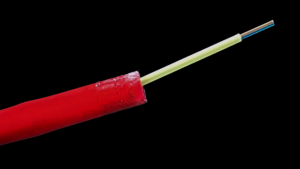
PFU (Enhanced Performance Fiber Unit) is a lightweight air blown fiber cable designed for installation into microducts using compressed air. It is widely used in FTTH access networks and last-mile deployments, where flexibility, fast installation, and low initial investment are critical.
As a core component of modern air blown fiber cable systems, EPFU enables network operators to deploy fiber only when needed, making it ideal for scalable and future-proof fiber infrastructure.
(For a complete overview of air blown technology, see our Air Blown Fiber Cable Guide.)
What Makes EPFU Different from Other Air Blown Cables?
Unlike higher fiber-count air blown cables used in backbone or metro networks, EPFU is designed for short to medium blowing distances and small-diameter microducts.
Its key purpose is simple:
Deliver fiber to the end user quickly, efficiently, and with minimal construction cost.
EPFU typically serves as the final distribution or drop fiber in FTTH and access networks.
EPFU Air Blown Fiber Cable Structure (Overview)
EPFU features a compact and optimized structure engineered specifically for blowing performance:
- Small outer diameter suitable for 3–5 mm microducts
- Multiple fiber options for flexible network design
- Special surface design to reduce friction and extend blowing distance
- Balanced stiffness for smooth installation and repeat blowing
- Gel-free construction for clean handling and easy termination
This structure allows EPFU to achieve reliable performance in both indoor and outdoor microduct environments.
Typical Applications of EPFU Air Blown Fiber Cable
EPFU is mainly used in access-level fiber networks, including:
- FTTH (Fiber to the Home) final drop connections
- FTTB and in-building fiber distribution
- Residential and commercial access networks
- Campus or industrial park last-mile fiber deployment
For higher fiber counts or longer distances, network designers usually combine EPFU with Super Mini Uni-tube or multi-core air blown cables at upstream levels.
Advantages of EPFU Air Blown Fiber Cable
1. Fast and Flexible Installation
EPFU can be blown into pre-installed microducts within minutes, significantly reducing labor time compared to traditional pulling methods.
2. Cost-Effective FTTH Deployment
Network operators avoid over-investing in unused fibers by installing EPFU only when customers are connected.
3. Excellent Blowing Performance
Optimized cable design ensures smooth installation and consistent blowing distances in small microducts.
4. Clean and Easy Handling
The gel-free structure simplifies cable preparation, splicing, and maintenance.
5. Future-Ready Network Design
EPFU supports a modular network approach, allowing easy upgrades without civil rework.
EPFU vs Other Air Blown Fiber Cable Types
| Cable Type | Typical Role | Fiber Count | Network Level |
|---|---|---|---|
| EPFU | Final drop / access | Low | FTTH last mile |
| Super Mini Uni-tube | Distribution | Medium | Building / access |
| Multi-core Air Blown Cable | Backbone | High | Metro / campus |
This hierarchy allows operators to build a layered, scalable air blown fiber network.
When Should You Choose EPFU?
EPFU is the right choice when:
- Microduct space is limited
- Fiber demand is low but may grow
- Fast FTTH connection is required
- Cost control and flexibility are priorities
For detailed specifications and available configurations, you can view our EPFU Air Blown Fiber Cable product page.
Conclusion
EPFU air blown fiber cable is a key building block of modern FTTH and access networks. By combining lightweight design, excellent blowing performance, and flexible deployment, it enables network operators to deliver fiber connections efficiently while keeping costs under control.
As part of a complete air blown fiber solution, EPFU works seamlessly with higher-capacity air blown cables to support scalable, future-proof network architectures.



 English
  Español