Respuesta rápida
Microduct fiber optic cables are smaller, lightweight, and designed for air-blown installation, making them ideal for scalable FTTH and high-density duct networks. Traditional duct fiber optic cables are more robust and installed using pulling methods, making them suitable for fixed infrastructure and backbone deployments.
Introducción
If you’re planning a fiber network today, chances are you’ve come across two main options: microduct cables and traditional fiber optic cables. On paper, both do the same job—but in real projects, they behave very differently.
Many existing networks still rely on duct-based infrastructure, where cables are installed through protective conduits known as sistemas de cables de fibra óptica en ductos. The real difference comes down to installation method, scalability, and long-term flexibility.
In this guide, we’ll break down the practical differences so you can choose the right solution for your project.
What Is a Microduct Fiber Optic Cable?
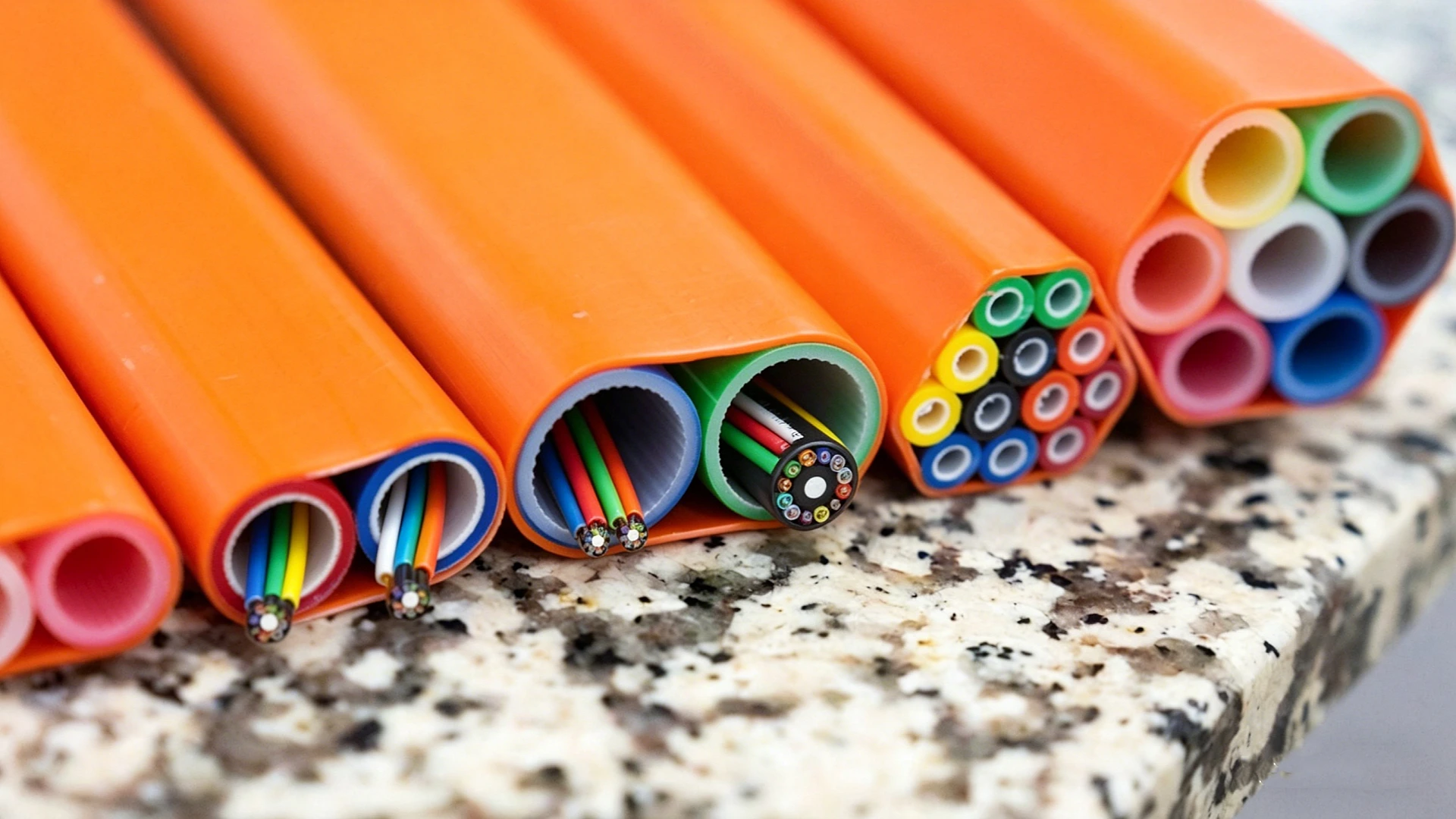
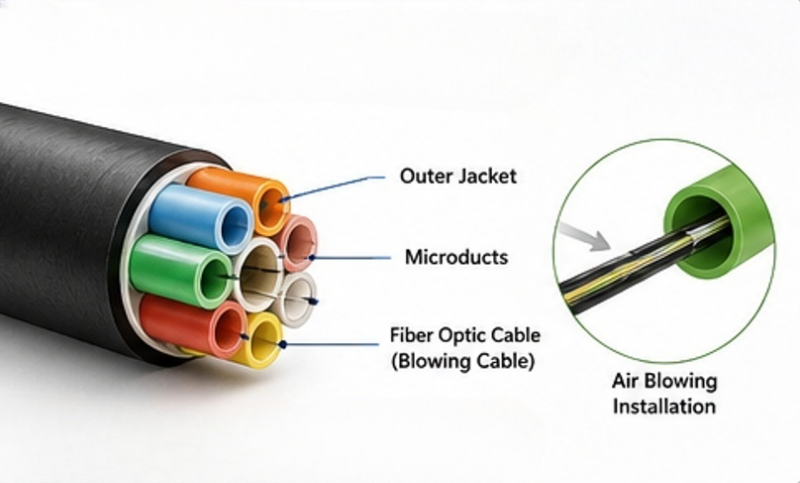
A cable de fibra óptica de microducto is a compact, lightweight cable designed to be installed inside small-diameter ducts using air-blowing technology.
Instead of installing one large cable, multiple microducts are deployed, allowing cables to be added as needed.
Key Characteristics
● Small diameter
● Lightweight structure
● Designed for air blowing
● Highly scalable
What Is Traditional Fiber Optic Cable?
Traditional fiber optic cables are the standard solution used in most networks. They are typically installed in larger conduits or directly buried, depending on the project.
These cables are widely used in cable de fibra óptica para conducto installations, where they are pulled through pre-installed ducts.
Key Characteristics
● Larger size
● More robust structure
● Suitable for pulling installation
● Widely used in backbone networks
Key Differences Between Microduct and Traditional Fiber Optic Cable
| Característica | Cable Microducto | Traditional Cable |
|---|---|---|
| Talla | Pequeño | Más grande |
| Instalación | Air blowing | Tirando |
| Flexibilidad | Alta | Medio |
| Escalabilidad | Excelente | Limitado |
| Coste inicial | Lower per phase | Higher upfront |
| Expansion | Fácil | More difficult |
Installation Method: The Biggest Difference
The installation method is where these two options truly diverge.
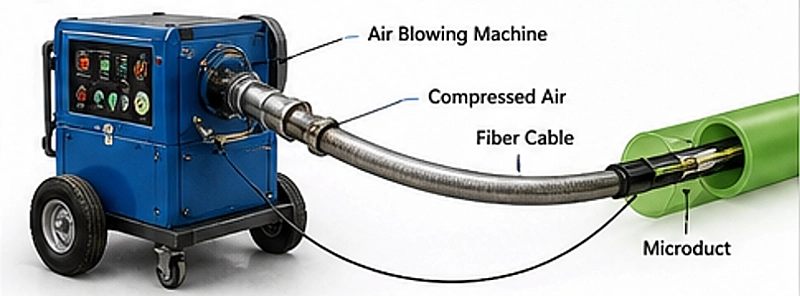
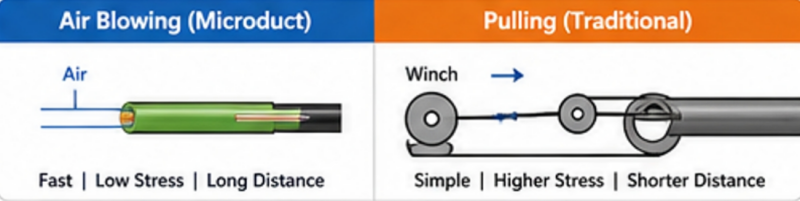
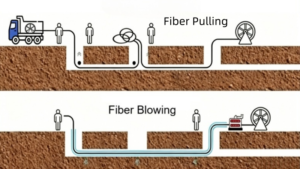
Microduct: Air Blowing
Microduct systems use compressed air to push cables through ducts.
Instalación más rápida
Lower mechanical stress
Ideal for long distances
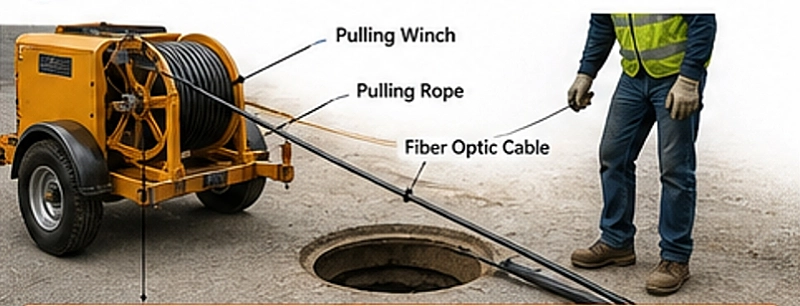
Traditional Cable: Pulling
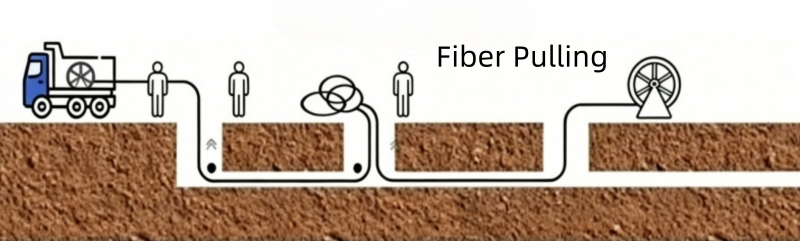
Traditional cables are installed by pulling them through conduits.
Simple and widely used
Suitable for shorter distances
Higher friction and tension
Escalabilidad y expansión futura
This is one of the biggest reasons operators are shifting toward microduct systems.
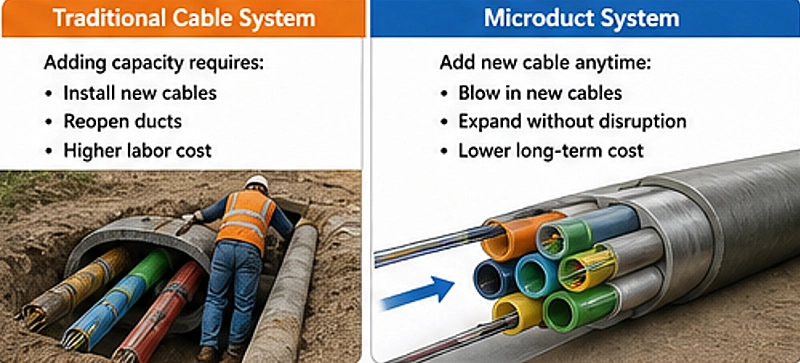
With traditional duct fiber optic cable systems, expanding capacity often requires:
● Installing new cables
● Reopening ducts
● Increased labor cost
With microduct systems, you can:
● Blow in new cables anytime
● Expand without disrupting existing infrastructure
Real-World Use Cases
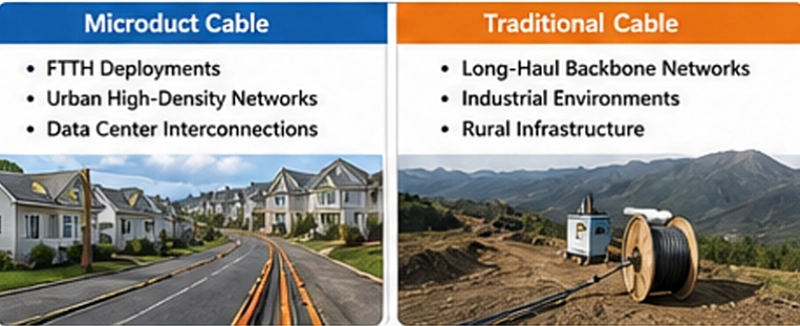
Cable Microducto
- Despliegues FTTH
- Urban high-density networks
- Data center interconnections
Traditional Cable
- Long-haul backbone networks
- Entornos industriales
- Rural infrastructure
The Role of Duct Systems
Both cable types depend on conduit systems to provide protection and routing.
In modern infrastructure, a well-designed duct fiber optic cable system plays a critical role in network reliability and scalability.
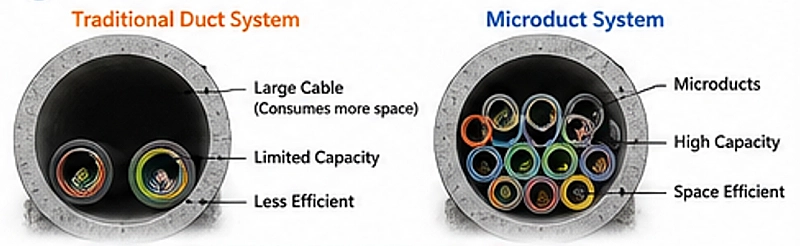
The key difference lies in space utilization:
● Microduct systems maximize duct capacity
● Traditional cables occupy more space
Consideraciones de costos
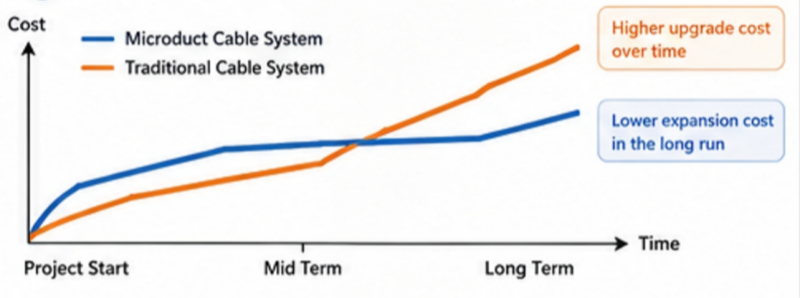
The cost comparison is not always straightforward.
Microduct:
● Lower cable cost
● Higher equipment investment (air blowing machines)
● Lower long-term expansion cost
Traditional:
● Lower equipment requirement
● Higher upgrade cost
● Less flexibility over time
Errores comunes a evitar
Choosing based only on initial cost
Ignoring future expansion
Using incorrect installation methods
Overloading duct space
Best Practice: How to Decide
Step 1: Consider long-term network growth
Step 2: Evaluate installation conditions
Step 3: Compare total lifecycle cost
Conclusión
Microduct and traditional fiber optic cables both play important roles in modern networks.
If your project requires flexibility and future expansion, microduct systems offer clear advantages. For stable and well-defined networks, traditional duct fiber optic cables remain a reliable and proven solution.
Preguntas frecuentes rápidas
What is the main difference between microduct and traditional fiber optic cable?
Microduct cables are smaller and installed using air blowing, while traditional cables are larger and installed by pulling.
Which is better for FTTH networks?
Microduct fiber optic cables are better for FTTH due to scalability and high-density deployment.
Is microduct cable more expensive?
Initial costs may be lower, but equipment costs are higher. However, long-term expansion is more cost-effective.
How far can microduct fiber cables be blown?
Depending on conditions, microduct cables can typically be blown over distances of 1–2 km or more.
Which is better for duct systems?
Microduct systems are better for flexible expansion, while traditional cables are suitable for fixed duct infrastructure.




 English
  Español