Introducción
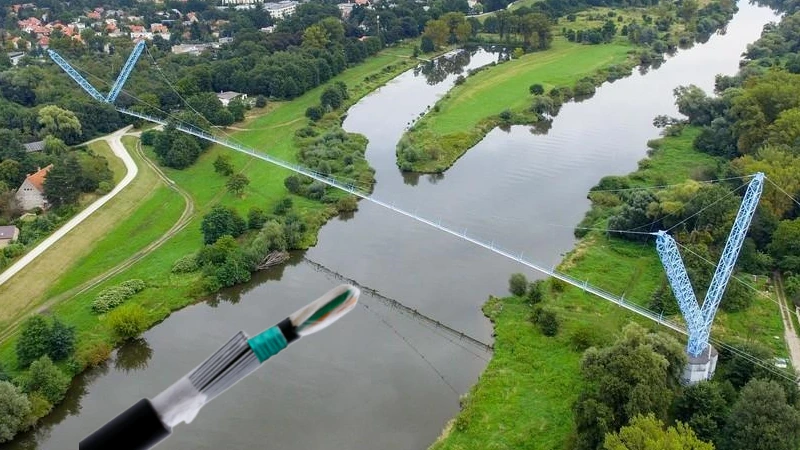
River crossing projects present a unique challenge for fiber optic network deployment. Unlike conventional underground installations, cables crossing rivers must withstand continuous water exposure, seasonal flooding, shifting riverbeds, and long-term mechanical stress.
Many network failures occur not because of the optical fibers themselves but because the selected cable structure cannot handle the environmental conditions encountered beneath or alongside waterways. A cable that performs well in a standard direct burial application may experience premature damage when exposed to moving sediment, riverbed erosion, or prolonged moisture.
As a result, selecting the correct cable design is one of the most important engineering decisions during project planning.
This guide explains how river environments affect cable performance, what cable structures are commonly used in river crossings, and how engineers determine the most appropriate solution for different project conditions.
Quick Answer: What Is the Best Fiber Optic Cable for River Crossings?
For most river crossing projects, armored fiber optic cables with enhanced water-blocking protection provide the highest level of reliability.
The best choice depends on several factors:
- River width
- Profundidad del agua
- Método de instalación
- Riverbed conditions
- Flood risk
- Vida útil prevista
In shallow crossings with stable riverbeds, a single steel wire armored design may be sufficient. For larger rivers, deep-water crossings, or areas exposed to severe environmental conditions, double armored constructions are often preferred.
The objective is not simply to choose the strongest cable available but to select a cable structure that matches the actual installation environment.
Why River Crossing Installations Are More Demanding Than Standard Underground Projects
River environments introduce risks that rarely exist in conventional underground deployments.
Continuous Water Exposure
Underground cables may occasionally encounter moisture, but river crossing cables remain exposed to water throughout their operational life.
Even minor defects in cable construction can eventually allow moisture penetration, leading to long-term performance degradation.
This is one reason why engineers frequently evaluate the overall water-blocking design in underwater fiber cables when assessing long-term reliability.
Riverbed Movement
Riverbeds are not static.
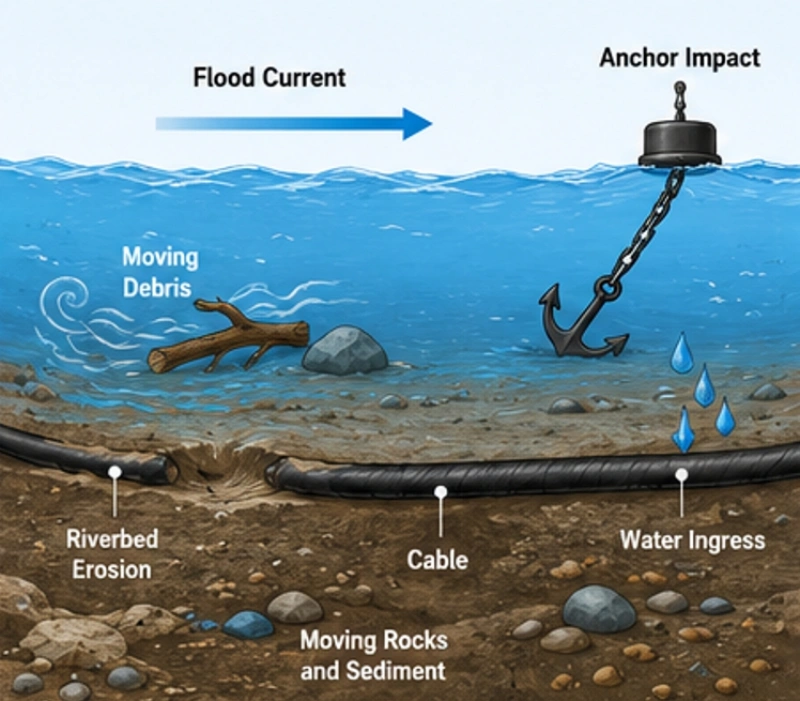
Sediment can shift during seasonal floods, exposing previously buried cables or increasing mechanical stress on protective layers.
The risk is especially high in rivers with sandy or gravel-based beds where erosion patterns change over time.
Mechanical Damage
Floating debris, anchors, fishing equipment, and construction activities can all create external threats to installed cables.
Without sufficient armor protection, these forces may eventually damage the outer sheath or internal cable components.
Difficult Repairs
Repairing a damaged underground cable is often straightforward.
Repairing a damaged cable beneath a river can be significantly more expensive and time-consuming.
For this reason, river crossing projects typically prioritize durability over minimizing initial cable cost.
Key Factors That Determine the Best Cable Type
Selecting a river crossing cable begins with understanding the environment.
River Width
The crossing distance influences both installation complexity and cable loading.
Small irrigation channels may only require relatively simple cable structures, while major river crossings often involve specialized installation equipment and higher tensile-strength requirements.
Water Depth
Depth affects both environmental exposure and maintenance accessibility.
As water depth increases, future inspection and repair operations become more difficult, making cable reliability increasingly important.
Riverbed Composition
Different riverbed materials create different challenges.
| Riverbed Type | Primary Concern |
|---|---|
| Sand | Scouring and exposure |
| Gravel | Abrasion |
| Rock | Impact and crushing |
| Mud | Settlement movement |
A cable selected for a muddy reservoir environment may not be suitable for a rocky riverbed with significant debris movement.
Flood Activity
Flood-prone rivers create additional stress through erosion, sediment transport, and mechanical impact.
Historical flood data often plays an important role during cable selection.
Common Fiber Optic Cable Structures Used in River Crossings
Several cable constructions are commonly used depending on project requirements.
Cable blindado con cinta de acero
Steel tape armor provides additional crush resistance and moderate protection against external mechanical forces.
These cables are frequently used in underground installations where tensile loads remain relatively low.
However, they are not always the preferred option for demanding river crossings.
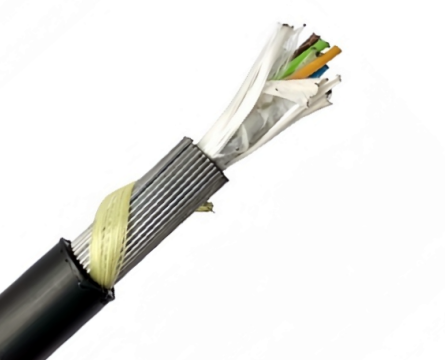
Cable blindado de alambre de acero
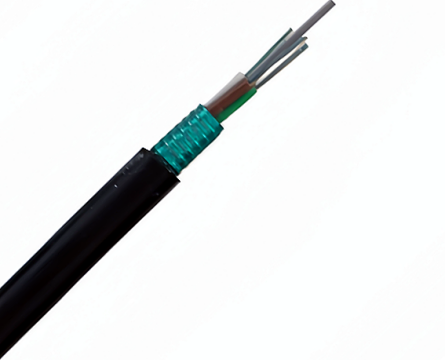
Steel wire armor offers significantly greater tensile strength and mechanical durability.
For many river crossing projects, a steel wire armored fiber optic cable provides an effective balance between protection and installation flexibility.
Common applications include:
- Small river crossings
- Reservoir projects
- Canal crossings
- Directional drilling installations
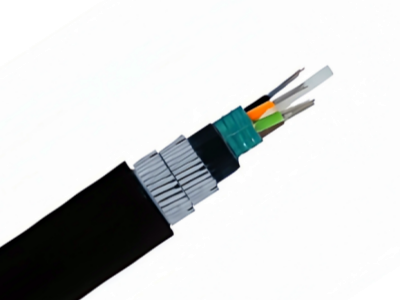
Cable doble blindado
Projects involving deep water, long crossing distances, or high environmental risk often require additional protection.
A double armored fiber optic cable incorporates multiple armor layers designed to improve resistance to tensile forces, abrasion, and external impacts.
Aplicaciones típicas incluyen:
- Large river crossings
- High-current waterways
- Deep reservoir installations
- Critical infrastructure projects
Single Armor or Double Armor: Which Is Better?
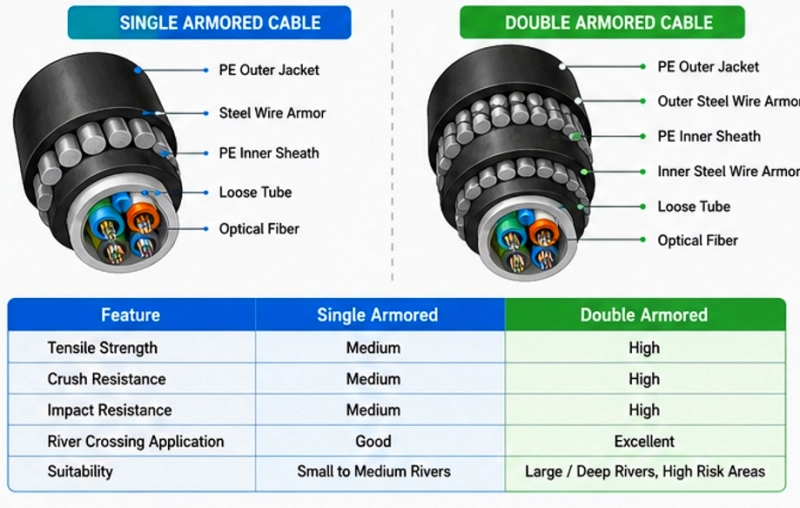
One of the most common questions in river crossing design involves armor selection.
The answer depends on project conditions rather than a universal rule.
Single armor designs typically provide sufficient protection for:
- Short crossings
- Stable riverbeds
- Limited mechanical risk
Double armor designs are often selected when projects involve:
- Deep water
- Long installation distances
- Significant riverbed movement
- Higher repair costs
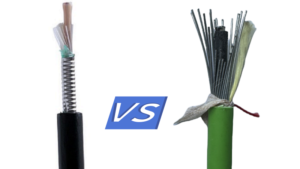
In practice, choosing between armadura de un solo alambre de acero vs armadura de doble alambre de acero requires balancing installation conditions, environmental risks, and project budget.
Best Cable Recommendations by River Crossing Scenario
Small Rivers and Irrigation Canals
Typical characteristics:
- Shallow water
- Limited crossing distance
- Low vessel activity
Recommended cable:
- Single steel wire armored cable
Primary design focus:
- Water resistance
- Moderate tensile strength
Medium-Sized Rivers
Typical characteristics:
- Seasonal flooding
- Moderate installation distance
- Variable riverbed conditions
Recommended cable:
- Enhanced steel wire armored designs
- Double armor where flood risk is significant
Primary design focus:
- Abrasion resistance
- Mechanical durability
Large River Crossings
Typical characteristics:
- Long distances
- Deep water
- Difficult maintenance access
Recommended cable:
- Cable blindado doble
Primary design focus:
- Long-term reliability
- Maximum mechanical protection
Reservoir and Dam Projects
Reservoir crossings often experience changing water levels and sediment movement.
These conditions frequently justify higher levels of mechanical protection than many planners initially expect.
How Engineers Select the Correct Cable
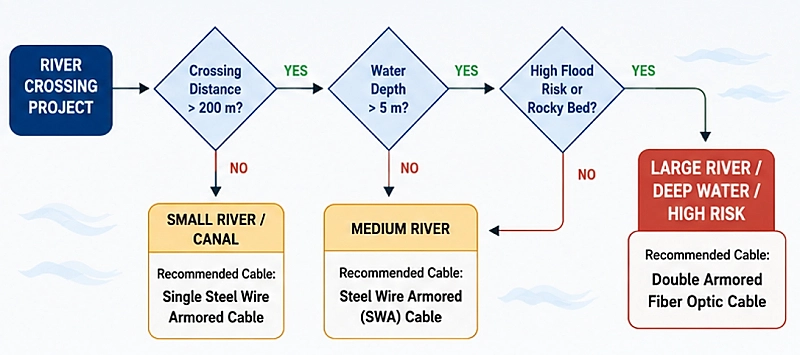
Successful projects rarely begin with the cable itself.
Instead, engineers first evaluate environmental and installation conditions before narrowing down cable options.
Typical considerations include:
- Profundidad del agua
- River width
- Método de instalación
- Flood history
- Riverbed composition
- Accesibilidad para el mantenimiento
- Service life expectations
This process is closely related to the broader methodology used in how to select underwater fiber optic cable for long-term network reliability.
When Is an Underwater Fiber Optic Cable Necessary?
Not every river crossing requires a specialized underwater cable.
Protected conduit systems or short crossings may allow alternative cable structures.
However, dedicated underwater cable designs become increasingly important when projects involve:
- Direct water exposure
- Long crossing distances
- Deep installations
- Flood-prone environments
- Difficult future maintenance
In these situations, selecting an underwater fiber optic cable for river crossings can significantly reduce long-term operational risk while improving overall network reliability.
Preguntas frecuentes
Can standard outdoor fiber optic cable be used for river crossings?
Only in protected environments. Direct exposure to river conditions typically requires additional armor and water-blocking protection.
Is double armor always necessary?
No. The appropriate armor level depends on environmental conditions, installation method, and project risk.
What causes most river crossing cable failures?
Water ingress, mechanical damage, riverbed movement, and improper cable selection are among the most common causes.
Which installation method provides the best protection?
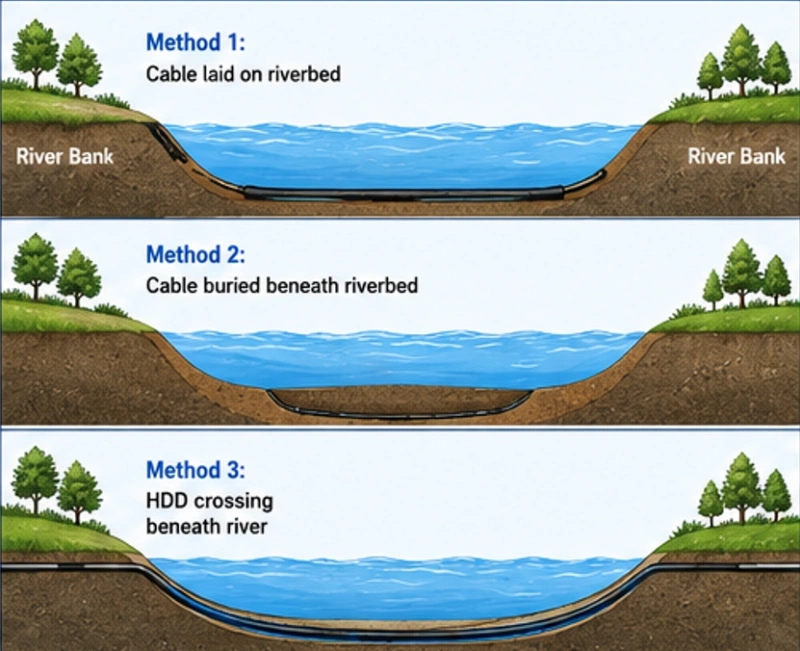
Horizontal directional drilling (HDD) is often considered one of the safest methods because the cable remains isolated from direct riverbed exposure.
How long can river crossing fiber optic cables last?
Properly designed and installed systems commonly achieve service lives exceeding 20 years.
Conclusión
River crossing projects require careful consideration of environmental conditions, mechanical risks, and installation requirements. No single cable design is ideal for every situation.
By evaluating river width, water depth, riverbed composition, and flood activity, engineers can select a cable structure that provides reliable long-term performance. Whether the project involves a small irrigation canal or a major river crossing, choosing the appropriate armor level and water-blocking design remains essential for minimizing maintenance costs and maximizing network lifespan.

 English
  Español