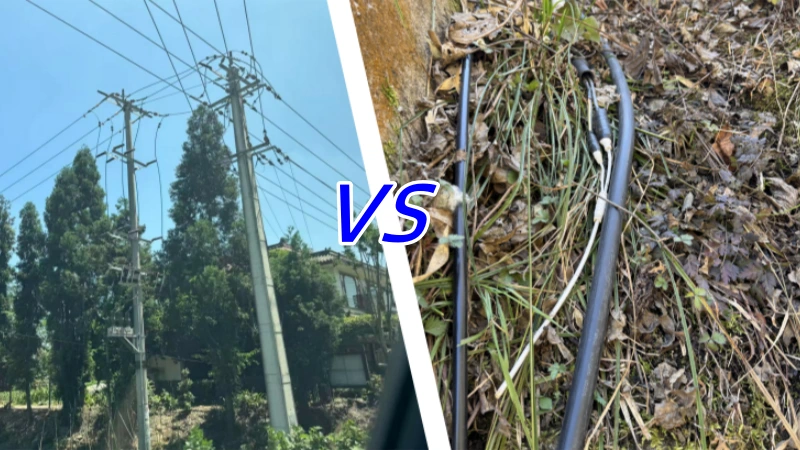
Aerial vs Underground Fiber Optic Cable
Choosing between aerial and underground fiber optic cable is one of the most important decisions in outdoor network planning.
The wrong installation method can increase:
- Deployment cost
- Maintenance difficulty
- Construction time
- Future repair expenses
- Environmental risk
Both aerial and underground fiber systems have advantages, but the best option depends on terrain, budget, weather conditions, network scale, and maintenance requirements.
If you are planning outdoor fiber deployment, understanding what is aerial fiber optic cable helps explain how overhead fiber systems compare with underground infrastructure.
Quick Answer: Aerial vs Underground Fiber Optic Cable
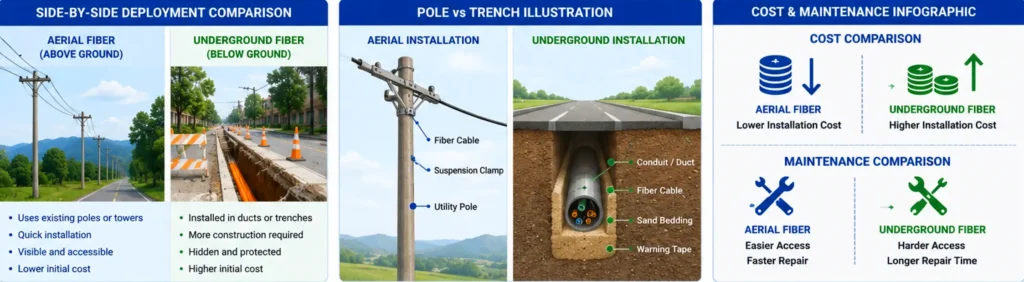
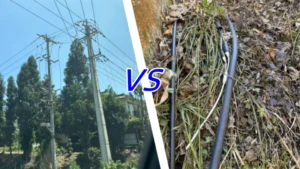
Aerial fiber optic cable is installed above ground on poles or towers, while underground fiber optic cable is installed in ducts, conduits, or buried trenches.
Main Differences
| Feature | Aerial Fiber | Underground Fiber |
| Installation Cost | Lower | Higher |
| Deployment Speed | Faster | Slower |
| Maintenance Access | Easier | More difficult |
| Weather Exposure | Higher | Lower |
| Physical Protection | Lower | Higher |
Many planners comparing outdoor infrastructure search for aerial vs underground fiber cable before selecting deployment methods.
What Is Aerial Fiber Optic Cable?
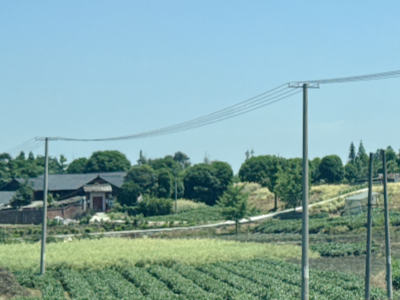
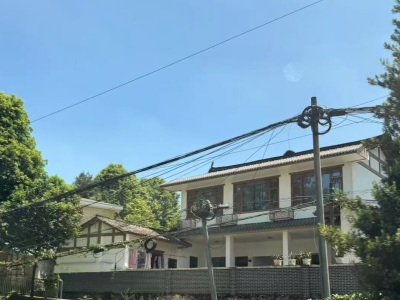
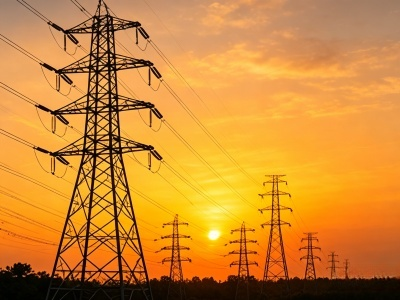
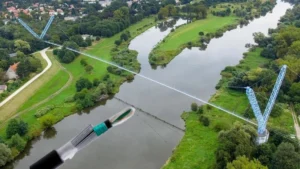
Aerial fiber optic cable is an overhead communication cable installed on poles or towers using suspension hardware or self-supporting structures.
It is widely used because it offers:
- Faster deployment
- Lower civil construction cost
- Easier route expansion
- Simple maintenance access
Common aerial cable types include:
- ADSS cable
- Figure-8 cable
- OPGW cable
Many network operators searching for overhead vs underground fiber optic cable comparisons are evaluating deployment speed and construction cost.

What Is Underground Fiber Optic Cable?
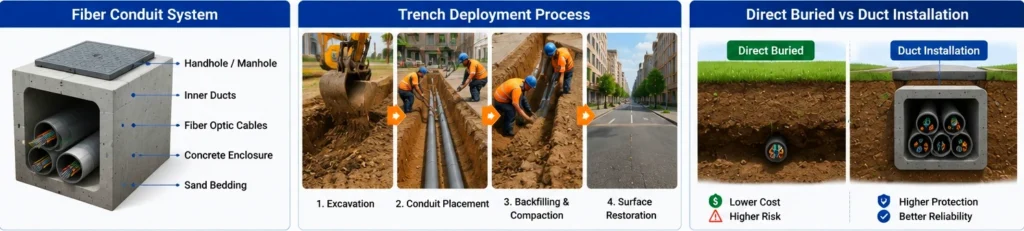
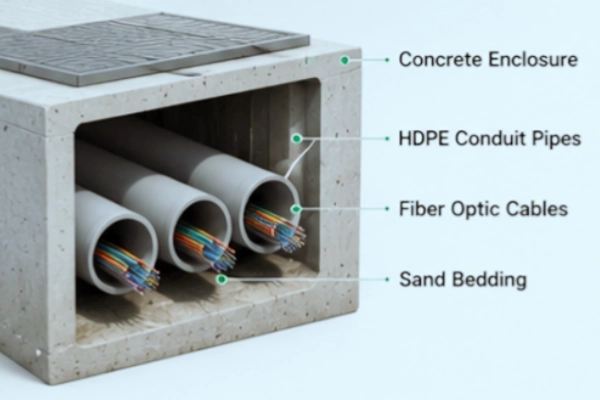
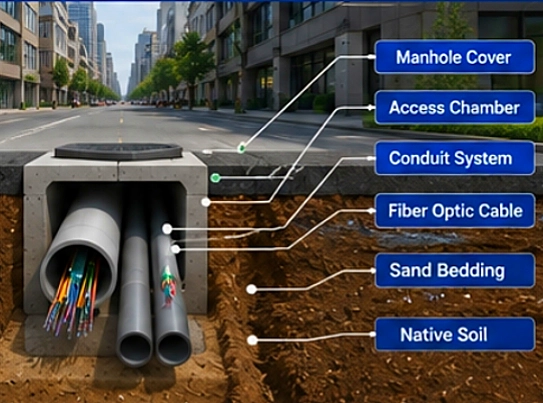
Underground fiber optic cable is installed below ground inside ducts, conduits, or directly buried trench systems.
Compared with aerial systems, underground fiber offers:
- Better physical protection
- Reduced weather exposure
- Cleaner urban appearance
- Lower wind and ice risk
However, underground installation usually requires:
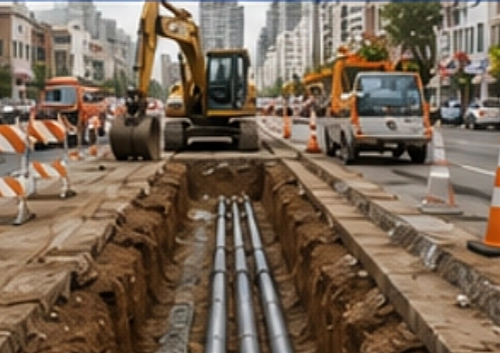
- Trenching
- Conduit systems
- Civil construction
- Higher installation cost
Projects using underground infrastructure often rely on duct fiber optic cable solutions for protected conduit installation.
Installation Cost Comparison
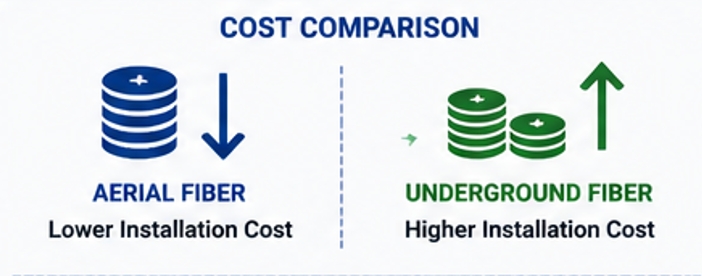
Aerial fiber installation is usually less expensive because it avoids trenching and underground civil construction.
Typical Cost Differences
| Installation Factor | Aerial Fiber | Underground Fiber |
| Pole/Tower Use | Existing infrastructure | Not required |
| Trenching | Not required | Required |
| Conduit Installation | Minimal | Extensive |
| Labor Cost | Lower | Higher |
| Installation Speed | Faster | Slower |
In rural and long-distance routes, aerial deployment is often significantly more economical.
Deployment Speed Comparison
Aerial fiber deployment is generally faster because installation can use existing utility poles and overhead infrastructure.
Underground deployment often takes longer due to:
- Excavation permits
- Trenching
- Road restoration
- Conduit installation
- Utility conflict inspection
This is why many rural broadband projects prefer aerial deployment.
Maintenance and Repair Comparison
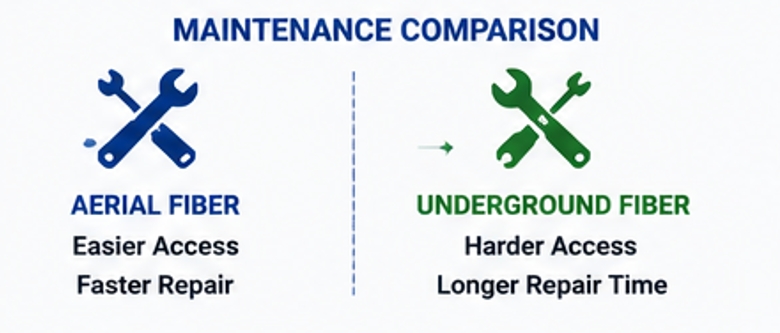
Aerial fiber cable is easier to inspect and repair because the cable is visible and accessible above ground.
Underground fiber faults can be more difficult to locate because cables are hidden inside ducts or buried systems.
Maintenance Comparison
| Maintenance Factor | Aerial Fiber | Underground Fiber |
| Fault Detection | Easier | More difficult |
| Repair Speed | Faster | Slower |
| Cable Access | Direct | Excavation required |
| Weather Damage | Higher | Lower |
Environmental and Weather Performance
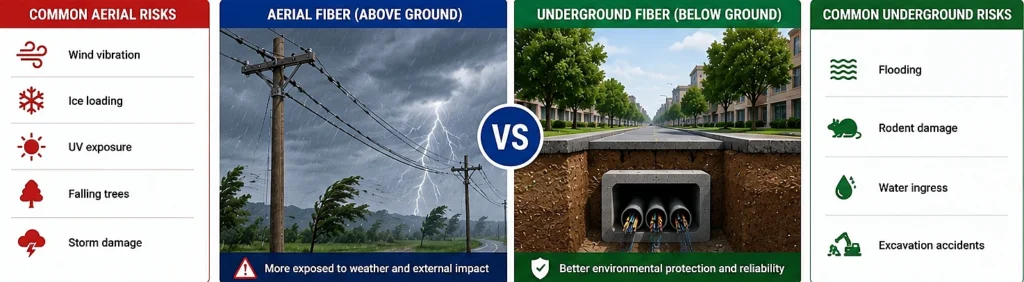
Aerial fiber cable is more exposed to weather, while underground cable has better environmental protection.
Common Aerial Risks
- Wind vibration
- Ice loading
- UV exposure
- Falling trees
- Storm damage
Common Underground Risks
- Flooding
- Rodent damage
- Water ingress
- Excavation accidents
Proper cable selection significantly affects outdoor reliability.
Many outdoor projects use direct buried fiber optic cable systems when underground deployment requires additional mechanical protection.
Which Installation Method Is Better?
The best installation method depends on budget, terrain, maintenance access, environmental conditions, and project requirements.
Choose Aerial Fiber When:
- Budget is limited
- Fast deployment is needed
- Existing poles are available
- Rural routes are involved
- Easy maintenance is important
Choose Underground Fiber When:
- Urban appearance matters
- Maximum physical protection is required
- Severe weather exposure is expected
- Underground conduit already exists
Many planners searching which installation method is better are comparing long-term maintenance and deployment cost.
Aerial vs Underground Fiber in Rural Areas
Aerial fiber deployment is usually preferred in rural areas because long-distance trenching can be expensive and time-consuming.
Advantages of aerial deployment in rural environments include:
- Existing utility poles
- Faster installation
- Lower labor cost
- Easier expansion
This is why many broadband expansion projects use aerial infrastructure in remote regions.

Aerial vs Underground Fiber in Urban Areas
Underground fiber installation is more common in dense urban areas where aesthetics, traffic safety, and infrastructure protection are important.
Urban underground systems are often preferred because they:
- Reduce visual clutter
- Protect cable from vehicle impact
- Improve city appearance
- Lower storm exposure
However, installation complexity is usually much higher.
Common Mistakes When Choosing Installation Method
Common planning mistakes include:
- Ignoring maintenance cost
- Underestimating trenching expense
- Selecting aerial cable in severe storm zones without protection
- Choosing underground deployment without conduit planning
- Ignoring future network expansion
These problems may increase:
- Repair cost
- Downtime
- Construction delay
- Long-term maintenance difficulty
FAQ About Aerial vs Underground Fiber Cable
Is aerial fiber cheaper than underground fiber?
Yes. Aerial fiber installation is usually less expensive because it avoids trenching and underground civil construction.
Which fiber installation method is faster?
Aerial fiber deployment is generally faster because existing poles can often be used without excavation.
Is underground fiber more reliable?
Underground fiber is better protected from weather and physical impact, but repairs can be more difficult and expensive.
Why do rural networks often use aerial fiber?
Rural networks often use aerial fiber because long-distance underground trenching is expensive and existing poles are usually available.
Can aerial fiber cable survive harsh weather?
Yes. Properly designed aerial fiber cable can operate in harsh outdoor environments with suitable sag control and vibration protection.
Which method is better for cities?
Underground fiber is often preferred in cities because it improves appearance and protects cable from traffic and weather exposure.
Conclusion
Both aerial and underground fiber optic cable systems offer important advantages depending on project requirements.
Aerial Fiber Is Better For:
- Lower installation cost
- Faster deployment
- Rural broadband
- Easier maintenance
Underground Fiber Is Better For:
- Urban infrastructure
- Maximum physical protection
- Reduced weather exposure
- Cleaner visual appearance
Selecting the right installation method depends on balancing cost, environment, maintenance access, and long-term network reliability.


 English
  Español