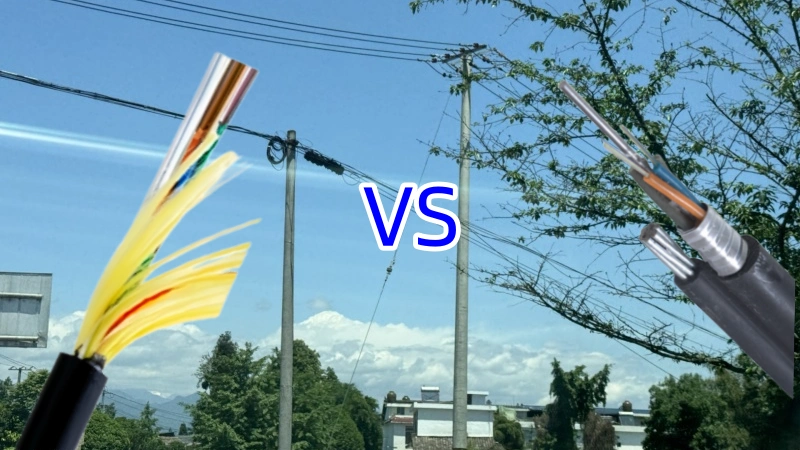
Choosing the right aerial fiber optic cable is critical for outdoor network performance. The two most common overhead cable types are ADSS cable and Figure-8 fiber optic cable. While both are designed for aerial installation, they differ in structure, installation method, span capability, and application environment.
The difference between ADSS and Figure-8 cable directly affects:
- Installation difficulty
- Long-span performance
- Power line compatibility
- Maintenance cost
- Network reliability
Before comparing these cable types, it helps to understand what is aerial fiber optic cable and how overhead fiber networks are commonly deployed in telecom and utility infrastructure.
This guide explains the structural differences, applications, installation methods, and cost considerations of ADSS and Figure-8 cable to help you select the best aerial fiber solution for your project.
Quick answer: ADSS vs Figure-8 Fiber Optic Cable
ADSS cable is a self-supporting all-dielectric aerial fiber optic cable designed for long-span installation and high-voltage environments. Figure-8 cable uses an integrated steel messenger wire for support and is commonly used in telecom pole networks and medium-span aerial deployment.
Main Difference Between ADSS and Figure-8 Cable
| Feature | ADSS Cable | Figure-8 Cable |
| Structure | Self-supporting | Messenger wire support |
| Metal Components | No | Yes |
| Best For | Power lines & long spans | Telecom poles & urban deployment |
| Weight | Lighter | Heavier |
| EMI Resistance | Excellent | Moderate |
| Installation | More technical | Easier |
What Is ADSS Fiber Optic Cable?
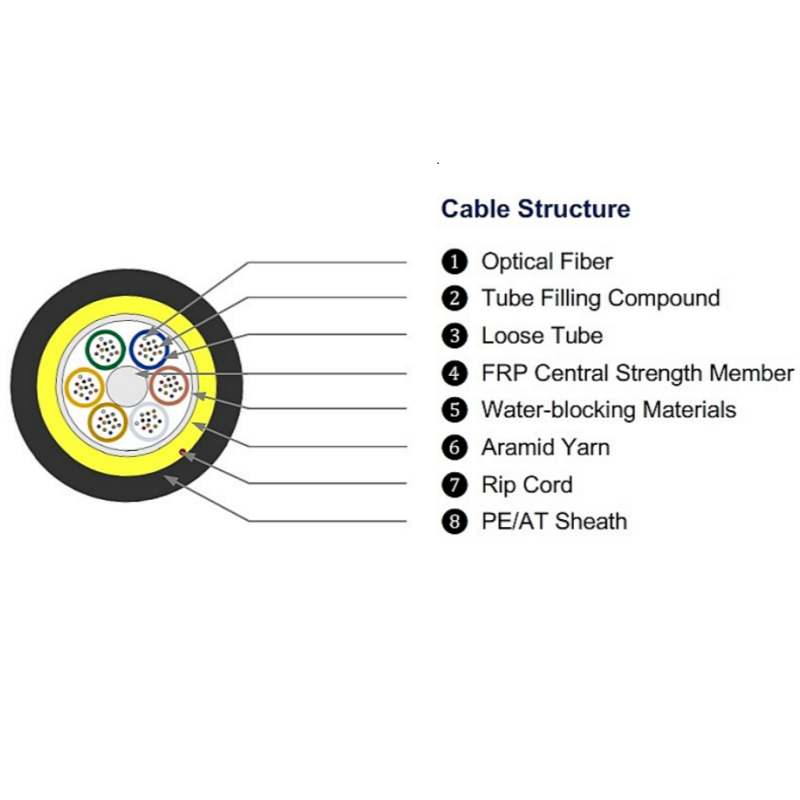
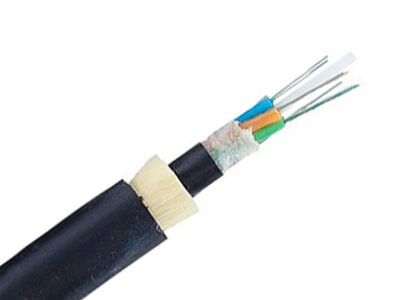
ADSS (All-Dielectric Self-Supporting) fiber optic cable is a non-metallic aerial cable designed for overhead installation without a messenger wire.
Instead of using a steel strand for support, ADSS cable uses internal aramid yarn or FRP strength members to carry installation tension.
Because the cable contains no conductive metal, it is highly resistant to electromagnetic interference and suitable for installation near power transmission systems.
Many utility contractors choose ADSS fiber optic cable for utility pole installation for long-span aerial communication projects because of its lightweight structure and dielectric safety.
Key Features of ADSS Cable
ADSS cable features include:
- All-dielectric construction
- No messenger wire required
- High EMI resistance
- Lightweight design
- Long-span aerial support
- Corrosion resistance
What Is Figure-8 Fiber Optic Cable?
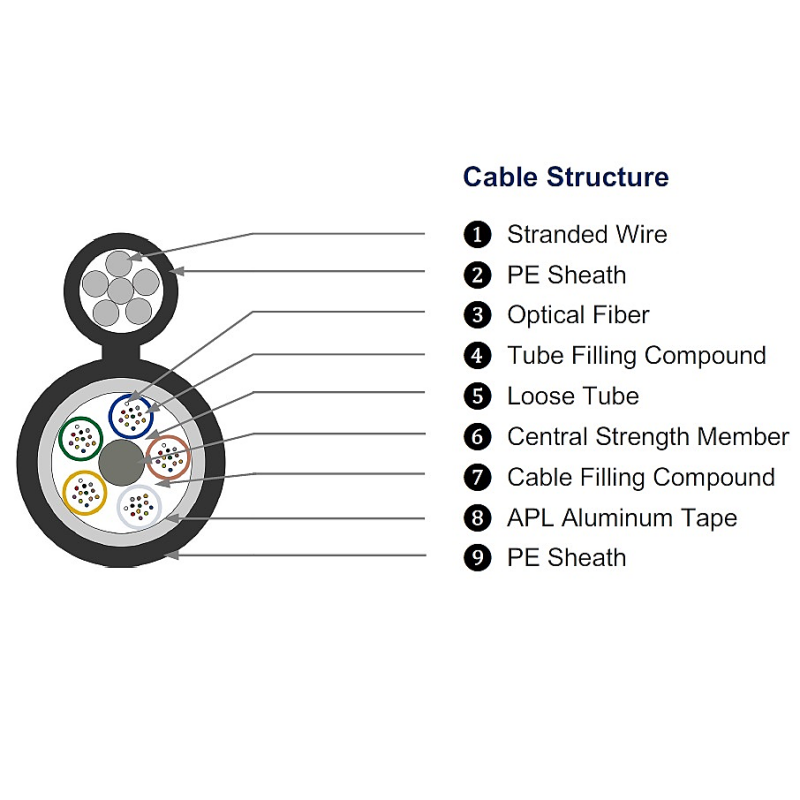
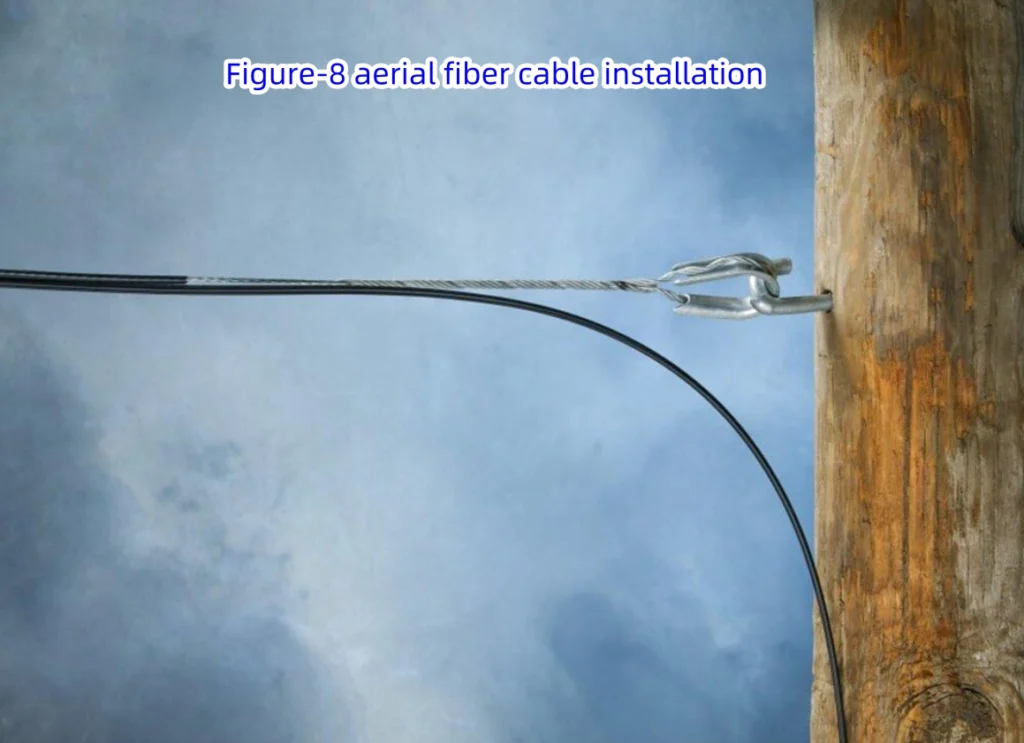
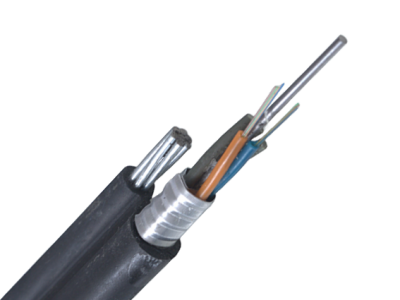
Figure-8 fiber optic cable combines the optical cable and steel messenger wire into one integrated structure shaped like the number “8”.
The messenger wire absorbs mechanical tension during installation, making the cable easier to suspend between telecom poles.
For telecom access networks and urban aerial deployment, many operators select figure 8 aerial fiber cable with steel messenger wire because of its lower installation cost and simplified suspension method.
Key Features of Figure-8 Cable
Figure-8 cable advantages include:
- Integrated steel messenger wire
- Easy pole installation
- Strong tensile support
- Lower deployment cost
- Suitable for medium aerial spans
Structural Difference Between ADSS and Figure-8 Cable
The biggest difference between ADSS and Figure-8 cable is how they support mechanical tension during aerial installation.
ADSS Cable Structure
ADSS cable is completely self-supporting. Internal aramid yarns or FRP rods absorb installation tension without requiring a messenger wire.
Advantages of ADSS Structure
- Better electrical insulation
- Reduced lightning risk
- Lower corrosion problems
- Suitable near power lines
In utility communication projects, ADSS is widely used as a fiber cable for transmission line deployment solution because it operates safely around high-voltage infrastructure.
Figure-8 Cable Structure
Figure-8 cable depends on its steel messenger wire for support. The messenger wire carries mechanical tension while the fiber section protects optical fibers.
Advantages of Figure-8 Structure
- Easier installation
- Lower manufacturing cost
- Faster deployment
- Strong suspension support
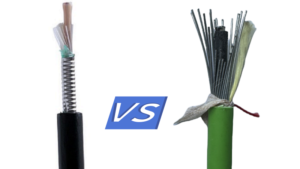
ADSS vs Figure-8 Cable: Main Differences
Featured Snippet Table
| Feature | ADSS Cable | Figure-8 Cable |
| Support Method | Self-supporting | Steel messenger wire |
| Metal Components | None | Yes |
| EMI Resistance | Excellent | Moderate |
| Installation Complexity | Moderate | Easier |
| Span Capability | Long spans | Medium spans |
| Weight | Lighter | Heavier |
| Corrosion Resistance | Better | Lower |
| Best Application | Power utility networks | Telecom pole networks |
| Cost | Higher | Lower |
Which Cable Is Better for Long-Span Deployment?
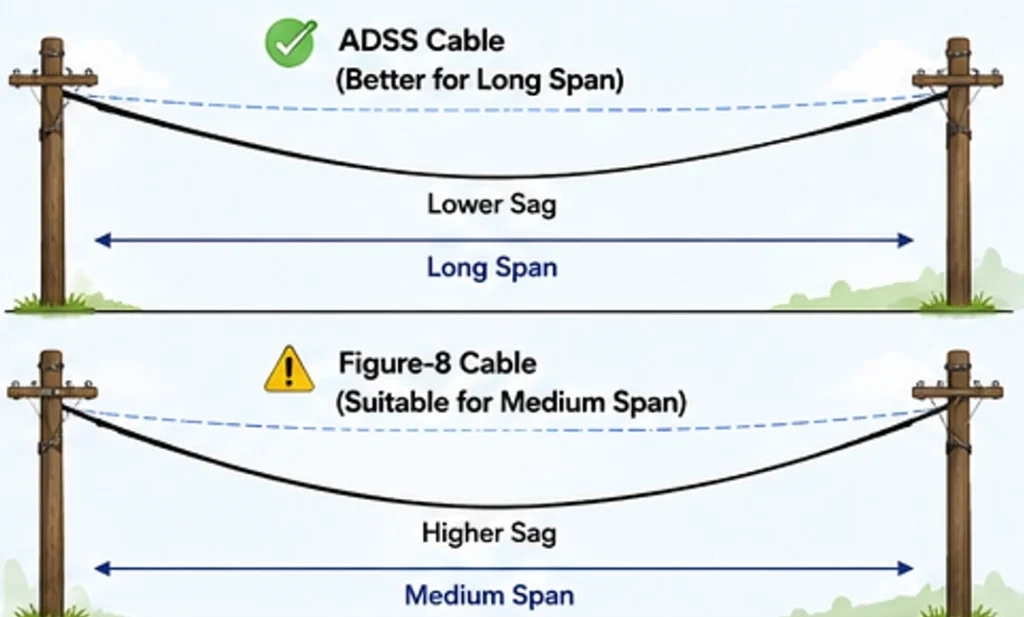
ADSS cable is generally better for long-span aerial deployment because its lightweight dielectric structure reduces sag and improves tensile performance over long distances.
Figure-8 cable is more suitable for medium-span telecom pole networks where easier installation and lower cost are priorities.
For engineers evaluating long span aerial fiber optic cable solutions, ADSS is commonly preferred in mountainous regions, utility corridors, and rural backbone networks.
Installation Comparison: ADSS vs Figure-8
Installation requirements differ significantly between these cable types.
ADSS Installation
ADSS installation requires:
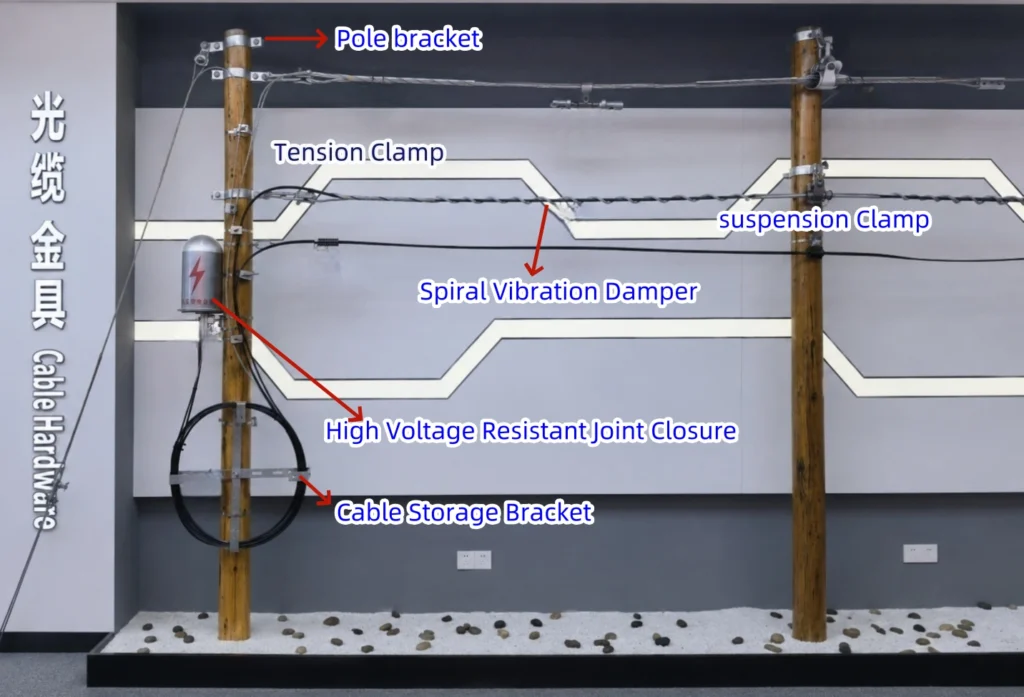
- Suspension clamps
- Dead-end hardware
- Tension calculation
- Span engineering analysis
Proper tension control is critical when learning how to install overhead fiber cable in long-span aerial systems.
Advantages
- Cleaner overhead structure
- Better long-span performance
- Reduced electrical risks
Challenges
- Higher hardware cost
- More technical installation
- Requires professional engineering
Figure-8 Installation
Figure-8 cable installation is generally simpler because the messenger wire directly connects to pole suspension hardware.
Advantages
- Faster deployment
- Lower labor cost
- Easier urban installation
Challenges
- Heavier handling
- Messenger wire corrosion risk
- Less suitable near transmission lines
Cost Comparison Between ADSS and Figure-8 Cable
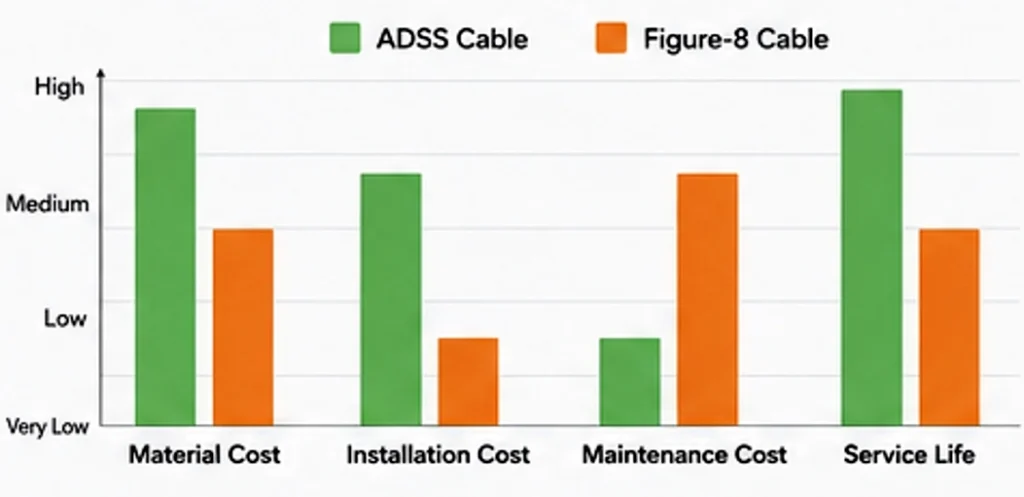
Figure-8 cable usually has lower initial cost, while ADSS cable offers lower long-term maintenance in harsh outdoor environments.
Cost Factors Comparison
| Cost Factor | ADSS Cable | Figure-8 Cable |
| Material Cost | Higher | Lower |
| Installation Cost | Higher | Lower |
| Maintenance Cost | Lower | Higher |
| Service Life | Longer | Moderate |
How to Choose the Right Aerial Cable
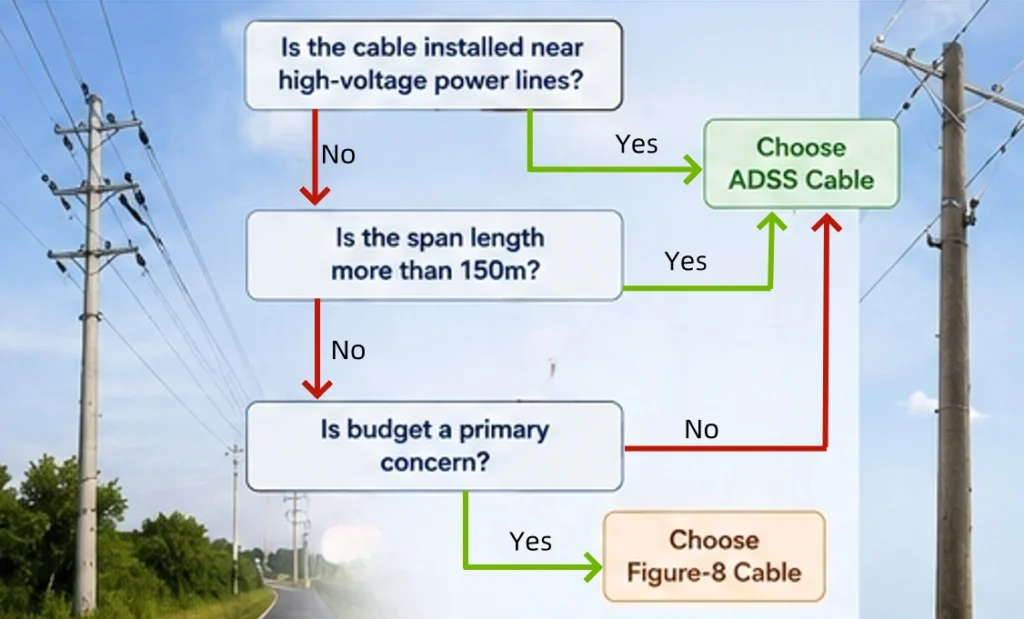
Choosing between ADSS and Figure-8 cable depends on installation environment, span distance, and long-term maintenance expectations.
If you are still evaluating deployment requirements, this detailed aerial cable selection guide explains how to match cable structure with terrain, weather conditions, and project budget.
Choose ADSS Cable If You Need:
Choose ADSS cable for:
- Long aerial spans
- Power utility networks
- Lightning-prone environments
- EMI-sensitive installations
- Low maintenance systems
Choose Figure-8 Cable If You Need:
Choose Figure-8 cable for:
- Urban telecom deployment
- Lower installation cost
- Existing pole infrastructure
- Medium-span aerial routing
- Faster installation
Some network planners also compare aerial vs underground fiber cable deployment methods before finalizing network design.
Common Mistakes When Selecting Aerial Fiber Cable
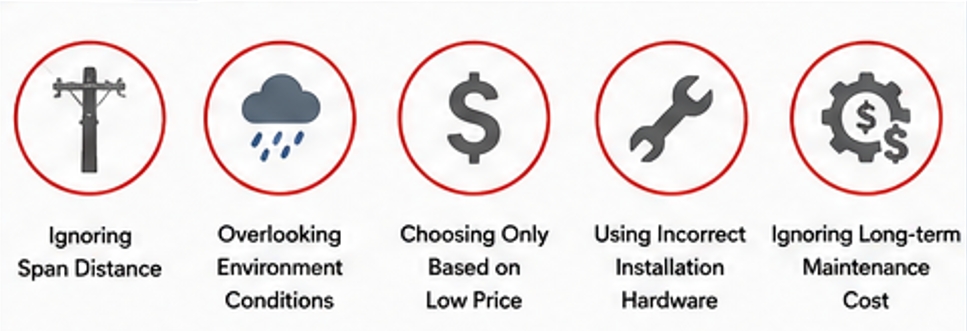
Common aerial cable selection mistakes include:
- Ignoring span distance
- Overlooking environmental conditions
- Choosing only based on initial price
- Using incorrect suspension hardware
- Forgetting long-term maintenance cost
Conclusion
ADSS and Figure-8 fiber optic cables are both reliable aerial deployment solutions, but they are optimized for different environments.
ADSS cable is ideal for long-span, high-voltage, and harsh outdoor conditions where dielectric safety and low maintenance are priorities.
Figure-8 cable is better suited for urban telecom networks, medium-span aerial routing, and cost-effective overhead deployment.
Understanding the difference between these cable types helps network planners improve installation reliability, reduce maintenance risks, and choose the best aerial fiber solution for long-term network performance.


 English
  Español